
Blog
What Happens During a Full Heating Service?
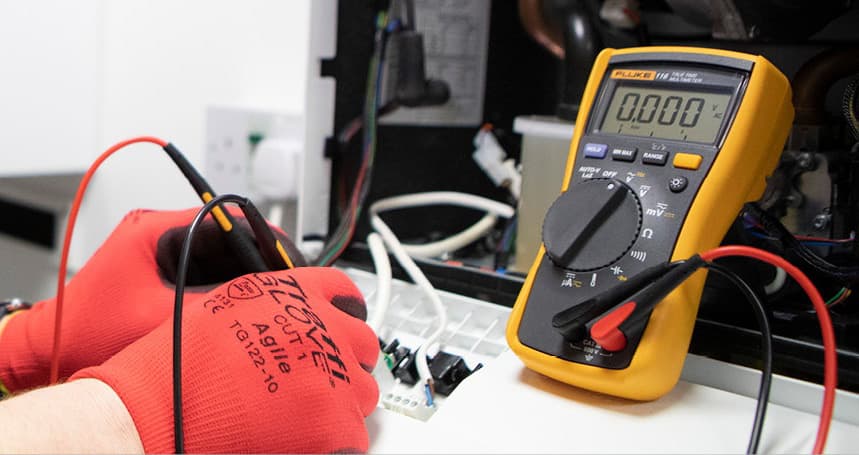
What a full heating service should actually tell you
A proper heating service is not simply a visual check followed by a tick on a form. It is a structured assessment of how safely and effectively your heating system is operating, including the boiler, controls, system pressure, condensate pipework, flue (the pipe that carries exhaust gases away) and accessible parts of the heating system.
Here at Optimal Climate, we use the service to understand what the system is doing now and whether there are signs of a developing fault. That distinction matters. A boiler can still produce heat while combustion, pressure, drainage or controls are beginning to perform outside normal conditions.
Our certifications include Gas Safe Registered, Vaillant Approved and Ideal Max Accredited credentials. The purpose of the visit is not to recommend work for its own sake. It is to establish what is safe, what is functioning correctly and what deserves attention.
The service starts with the system, not just the boiler
Before testing individual components, we need to understand the installation around the appliance. The property, heating layout and way you use the system all affect what normal operation looks like.
We may ask about symptoms such as radiators failing to heat evenly, repeated pressure loss, unusual noises, slow hot water recovery or controls that do not respond as expected. These details help connect a visible problem with its likely cause. For example, pressure dropping repeatedly may point towards a leak, an expansion issue or another system fault. Simply topping the pressure up does not explain why it fell.
We also consider accessible pipework, radiators and valves. Corrosion, staining, damaged insulation or signs of leakage can reveal problems away from the boiler itself. A service that ignores these areas can miss the reason a system is unreliable.
Boiler and combustion checks
The boiler inspection focuses on safe operation as well as output. For a gas appliance, the engineer assesses the condition of relevant components and carries out appropriate combustion and flue checks. These tests help identify whether the appliance is burning and discharging products as it should.
The flue is particularly important because it carries exhaust gases away from the property. We check its visible condition, outlet and accessible connections as part of checking the boiler. Internal or concealed sections may require further investigation if there are signs that something is not right.
We do not treat a boiler as an isolated box. Air supply, flue arrangements, condensate drainage and the surrounding installation all form part of the safety picture. If a condensate pipe is restricted or drainage is not working correctly, the boiler may lock out or suffer related faults. Finding the mechanism behind the symptom is more useful than repeatedly resetting the appliance.
Controls, pressure and heat distribution
A heating system can be mechanically sound but still perform poorly if its controls are misunderstood, incorrectly configured or no longer responding properly. We check the operation of the relevant controls and consider whether the system is receiving the correct instructions.
System pressure is also assessed in relation to the installation. Pressure that is too low can stop hot water moving around the system properly, while pressure that rises or falls unexpectedly may indicate an underlying issue. The right response depends on what the system is showing, not on applying the same adjustment to every property.
Radiators and visible pipework provide further information. Uneven heating may be linked to air in the radiators, an adjustment issue, restricted water flow, deposits in the system or a control problem. A service can identify when a straightforward adjustment may help and when the symptoms suggest a deeper system fault that needs separate work.
What happens when we find a problem
We explain the finding in practical terms and separate immediate safety concerns from maintenance recommendations. You should understand what has been observed, why it matters and what could happen if it is left unresolved.
Some findings can be dealt with as part of the service where the work is appropriate and agreed. Others need a repair, component replacement or further investigation. We will not pretend that a routine service can resolve a fault that requires additional diagnosis. Clear boundaries are important, particularly where gas appliances or combustion safety are involved.
Do not remove boiler covers, interfere with gas components or attempt to test how the boiler burns fuel yourself. Those tasks require the correct competence and equipment. You can safely note fault codes, check whether controls respond and report changes in pressure or performance, then leave technical diagnosis to a qualified engineer.
The value of the service record
At the end of the visit, the useful outcome is not just confirmation that the heating works. It is a clearer record of the appliance and system condition, including any observations that may affect future servicing, repairs or upgrades.
That information helps you make decisions based on evidence rather than guesswork. It can also give the next engineer a better starting point if a fault develops later. For homeowners in Kingston, Staines, Hampton, Sunbury-on-Thames, Weybridge and Camberley, we provide heating services built around safe diagnosis and practical advice.
If your boiler is noisy, losing pressure, producing uneven heat or behaving differently from normal, contact Optimal Climate on 07352 080055 or email info@optimalclimate.co.uk to discuss a heating service or the next appropriate step.
Other Articles